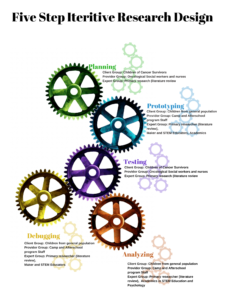
The second cycle in The Wellbotics Process is Prototyping. Prototyping is especially important because it helps us to transform our ideas into something that is both tangible and testable.
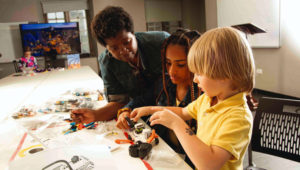
Here at Wellbotics, we prototype our lessons in several ways. We work with kids not identified as having experienced trauma to try out the tools and technology and spark conversation about the ideas. We also solicit feedback from experts in fields like maker education, psychology, and social work via the prototype. And kids are invited to try the proposed robot build and program, tinker with the design of the game board, and provide feedback about their own learning and experience with the program.
When Dr. Davis was developing The Wellbotics Process, she drew not only from the realm of design but also from the fields of computer science, engineering, and manufacturing. But what exactly is a prototype?
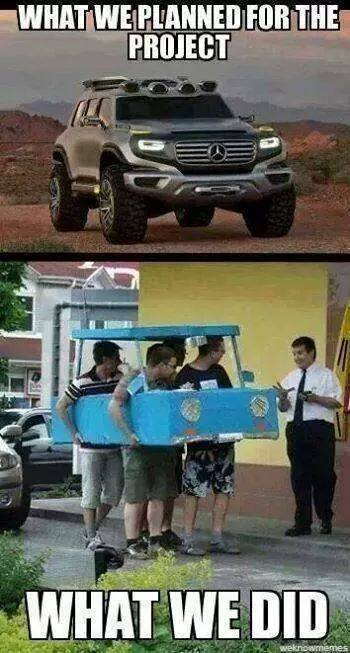
Well, we should probably start out by saying that a prototype may not always look quite like what you have in mind for the final product for your project…
https://whatsappbin.com/index.php/2018/02/27/concept-vs-prototype-techie-humor/
However, according to Samuel Perkins, the Energy Lab Manager with the Innovation Service for the United Nations High Commissioner for Refugees , “A prototype is an early sample, model, or release of a product or system built to test a concept or assumption or to act as a thing to be tested and learned from.” And testing is an integral part of the learning process. However, this may lead us to wonder what sort of thing might qualify as a prototype.
https://www.entrepreneur.com/article/308724
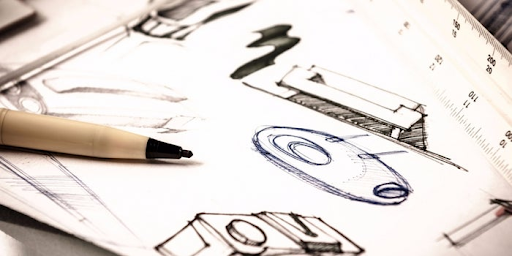
Rikke Dam and Teo Siang with the Interaction Design Foundation, propose that “Simple sketches or storyboards used to illustrate a proposed experiential solution, rough paper prototypes of digital interfaces, and even role-playing to act out a service offering an idea are examples of prototypes.” For us, a prototype may take the form of a lesson plan that includes background information about physical health and a robotic representation like a build program or a track for a robot to run on. Once we understand what qualifies as a prototype, though, we may begin to wonder precisely what the purpose of a prototype is.
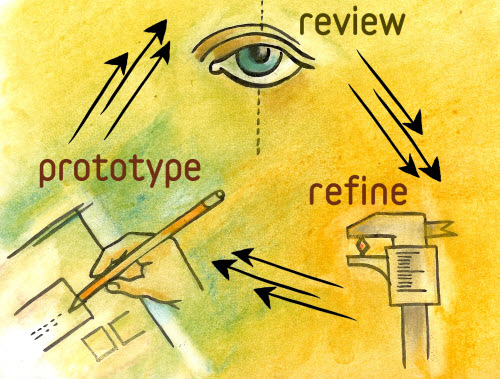
The purpose of a prototype is to serve as a physical representation of a concept. And, the Hasso Plattner Institute of Design at Stanford University states that “If a picture is worth a thousand words, a prototype is worth a thousand pictures.” In other words, a prototype goes beyond what the final product might look like and shows us what that product may actually be capable of doing.
https://www.unhcr.org/innovation/what-is-prototyping-anyway/
By seeing what a final product could be capable of doing through the use of a prototype, there is much to be gained. Andrew J. Ko at the University of Washington asserts that “…prototyping isn’t strictly about learning to make things, but also learning how to decide what to make and what it would teach you.” And learning is central to our mission here at Wellbotics.
This is the third in a series of articles on The Wellbotics Process. Check back with us for the next article which will dissect the Piloting cycle. And in the meantime, if you haven’t already, follow us on Facebook, Twitter, LinkedIn, and Instagram for more news from the Wellbotics team.
Maria Class
Wellbotics Team Leader and Curator